|
Watch the below from 31 mins to learn about Bligh and the Rum Rebellion
|
The Rum RebellionIn 1808, exactly 20 years after colonisation, the spirit of enterprise in the settlers and freed convicts has transformed Sydney from a rogue penal colony into a bustling trading port. New Governor William Bligh (of Mutiny on the Bounty infamy) has strict orders – restore New South Wales to a colonial backwater for farmers and convicts. Bligh declares war on the merchants of Sydney and anyone else who tries to make a quid. His coup de grâce - he makes it illegal for soldiers and their families to trade in rum. The result is a very Australian rebellion and the first of many challenges to London’s authority.
(Source: au.prime7.yahoo.com) |
|
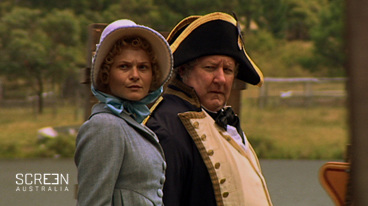
Governor Bligh arrives in NSW
Governor Bligh arrives in NSW is an excerpt from the documentary Rites of Passage the second episode of the two-part series entitledRogue Nation, produced in 2008. Click on the image on the right to access the video from National Film and Sound Archive |
|
|
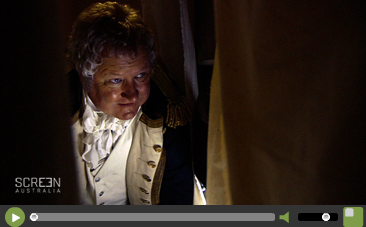
Bligh, Macarthur and The Rum Rebellion
Bligh, Macarthur and The Rum Rebellion is an excerpt from the documentary Rites of Passage the second episode of the two-part series entitled Rogue Nation, produced in 2009. Click on the image on the right to access the video from National Film and Sound Archive |
|
|
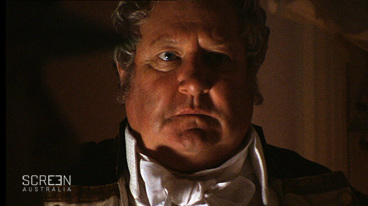
Governor Bligh - Hero or Coward?
Governor Bligh – Hero or Coward? is an excerpt from the documentary Rites of Passage the second episode of the two-part series entitled Rogue Nation, produced in 2008. Click on the image on the right to access the video from National Film and Sound Archive |
|
|
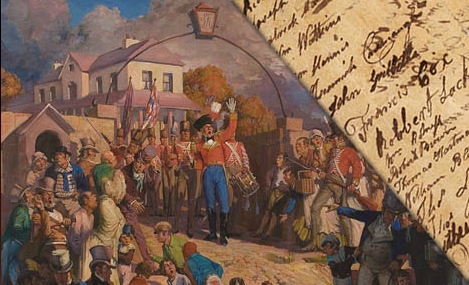
Click on the picture to listen to Michael Duffy explain about how 200 years ago Australia was rocked by its first and only military coup. On January 26, 1808, members of the NSW Corps marched up Sydney's Bridge Street to what was then Government House and arrested and deposed Captain William Bligh, the governor of the tiny convict colony. The event, which has become known as the Rum Rebellion, was the most dramatic incident in early white Australia history. |

| Click to download the above |
Sydney, 1808 |
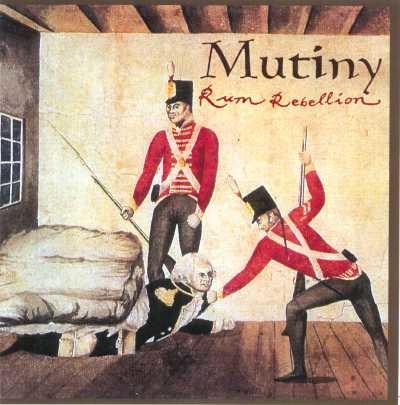
In the period leading up to the 1808 rebellion, Sydney was a garrison town. Much of the town's buildings and infrastructure were centred around the military. This 1808 map clearly shows the parade ground, around which the military barracks were located (now Wynyard Park). On the evening of January 26, 1808, the men of the New South Wales Corps marched from the parade ground on High Street (now George) up Bridge Street to Government House. They marched to the tune of 'British Grenadiers' and were followed by hundreds of spectators. When they arrived at Government House, the soldiers searched the property, before finally locating Governor Bligh, who, according to legend, was hiding under the bed. He was arrested and deposed and the Corps' commanding officer George Johnston took control of the Colony. (Source: http://www.sl.nsw.gov.au/)
|
Bligh and the Rum Rebellion
Overthrown |
On 26 January 1808, the 'Rum Rebellion' took place when 400 New South Wales Corps soldiers, led by Major George Johnston (1764–1823), marched from their barracks and arrested Governor William Bligh. The day was significant as it was the 20th anniversary of their arrival in the colony.
Captain William Bligh (1754–1817) was the fourth and last naval officer to be appointed Governor of the New South Wales penal colony, replacing Governor Phillip King (1758–1808) in 1806. Although he was a man of great integrity and courage, he was known for his hot temper and intemperate language. When Bligh arrived in the British colony it was in a poor state. Floods, the lack of supply ships and a reduction in convict labour had severely diminished the self-sufficiency of the colony. Bligh set up flood relief for the struggling farmers and promised immigrants that the government stores would buy their crops after the next harvest. Bligh also set up a government farm on the Hawkesbury as a 'model', to show the colonists what they believed to be the benefits of efficient farming. Bligh's reforms drew resentment from both the New South Wales Corps and landowners as he tightened government control over visiting ships and their cargos, and ordered that promissory notes be made payable in sterling currency. John Macarthur (1767–1834) was at the forefront of the opposition and when Bligh ordered the destruction of illicit stills and prohibited the bartering of spirits for grain, labour, food or any other goods, especially rum, these orders aroused immediate and heated revolt. The New South Wales Corps was a powerful force economically and numerically within the small colony. When Bligh tried to quell their opposition to his reforms, he deployed the ringleaders to different parts of the colony. Essentially, the New South Wales Corps felt that Bligh, a naval officer, interfered with their military command and this spurred Major Johnston to complain to the British commander-in-chief. Subsequently, Bligh recommended that the Corps be relieved of their commission in the colony. The balance of power was usurped when John Macarthur convinced the officers of the New South Wales Corps to arrest Bligh and put an end to his reign. (Source: http://www.myplace.edu.au/) Governor Bligh did have supporters but they were mainly British landholderswho had been given small areas of land in the Hawkesbury area. He had gained their support by assisting them during times of need. After the coup, the New South Wales Corps were withdrawn from the colony, Major Johnston was court-martialled and John Macarthur was exiled from the colony for eight years. Governor Bligh was promoted to rear admiral and then to vice admiral before his retirement. Major Johnston went to the military barracks on the evening of the 26th January 1808 to announce to the troops that he was assuming the title of Lieutenant-Governor, displacing Governor Bligh. He and his men marched through Sydney, bayonets fixed, while the band played ‘British Grenadiers’. When they arrived at Government House, Johnston arrested Bligh, allegedly finding him hiding under a bed. (Source: http://www.sl.nsw.gov.au/)
|
The main players - Macarthur, Bligh and Johnston
JOHN MACARTHUR (1767 – 1834)
|
John Macarthur (ca. 1767-1834) was an Australian merchant and sheep breeder. He became a powerful political leader and was a spokesman for the free settlers.
Macarthur set the standard for turbulence by quarrelling with Governor Arthur Phillip. He became inspector of public works and used this position to advance his own interests in the settlement. Trouble continued with the second governor, John Hunter, and was followed by more serious differences with the third, Philip Gidley King. Macarthur took up his grant at the Cowpastures near Camden and between 1805 and 1808 expanded and developed own interests. But the replacement of Hunter with Governor William Bligh brought a determined attempt to restrict illegal trading, especially in rum, as part of a plan to restore order to the colony. Macarthur emerged as the chief leader of a group affected by Bligh's policy. When Macarthur was arrested in January 1808 for an alleged breach the law, the senior officer, Major. George Johnston, released him and deposed Bligh in the so-called Rum Rebellion. To avoid court-martial he resigned from the army. He was, however, exiled from New South Wales and remained in England until 1817. (Source: http://biography.yourdictionary.com/john-macarthur) |
Click here to learn more about Macarthur's role in the Rum Rebellion
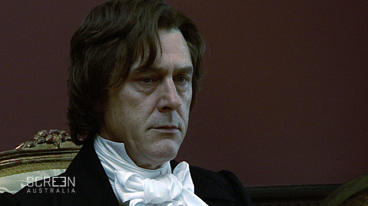
John Macarthur - Rogue or Hero? Click on the image to watch a short clip from the National Film and Sound Archive
|
|
|
WILLIAM BLIGH (1754 – 1817)William Bligh (1754-1817) was an English naval captain and a colonial governor of New South Wales, Australia.
Bligh had a reputation for tough, sometimes harsh leadership. In 1805, Joseph Banks recommended Bligh for the post of Governor of NSW, replacing Philip Gidley King. Bligh arrived to find the colony in a terrible state. Convict labour was in short supply, floods had ruined the crops and livestock of settlers in the Hawkesbury and the monopoly on trade by the NSW Corps and a small handful of traders made life very difficult for the average citizen. Bligh came into conflict almost immediately with John Macarthur over his land grant, with Bligh threatening to remove Macarthur from the Cowpastures. Bligh was determined to carry out his duties to the letter. He issued laws banning all forms of barter using spirits and outlawed illegal stills. He tightened port regulations to control the flow of rum into the colony. He also questioned the validity of property leases of several prominent citizens, including Macarthur. (Source: http://www.sl.nsw.gov.au/) |
GEORGE JOHNSTON (1764 – 1823)
|
George Johnston had arrived in the colony in 1788 with the First Fleet. By 1800 he was commanding officer of the NSW Corps during the long and frequent absences of Lieutenant-Colonel William Paterson. Johnston was proud of his position and defensive of the honour of the NSW Corps. He argued with several Governors, including Bligh, whom he felt meddled in the administration of the military. When Bligh threatened six of his officers with treason Johnston determined that the removal of these officers from duty would lead to an uprising by the soldiers and that Bligh needed to be removed from office for his own safety and for the good of the Colony.
(Source: http://www.sl.nsw.gov.au/) |
|
NSW Corps
|
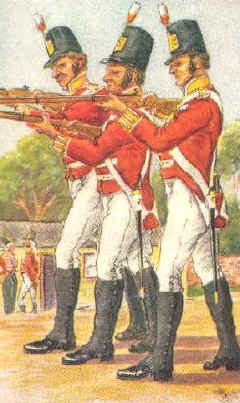
With the arrival of the corps in 1790–92, the colony gained a new dynamic force: officers and soldiers received land grants, becoming soldier-settlers; many officers became involved in business ventures, most notably the rum trade; and the ranks of the corps also provided the colony with explorers, surveyors, and scholars. From the time of the departure of the colony’s first governor, Arthur Phillip, in December 1792, until the arrival of Governor John Hunter in September 1795, the colony was administered by the commanding officer of the corps, first Francis Grose and then William Paterson. It was then that the officers’ economic activity advanced fastest. The corps asserted itself in a different way by putting down the 1804 rebellion of Irish convicts (the Castle Hill Rising). The officer in charge of this operation, Major George Johnston, was later among the leaders of the corps’ 1808 Rum Rebellion against the administration of Governor William Bligh, the celebrated victim of the earlier Bounty mutiny. Relations had long been strained with Bligh, who had accused the corps of corruption and ineptitude. After deposing him on January 26, 1808, the corps controlled the colony until Lachlan Macquarie became governor in January 1810. (Source: http://www.britannica.com/)
|
|

Click on the following links to learn more about the 'Rum Rebellion'

2008 Article titles 'Captain Bligh's other mutiny'
|

2008 article titled 'Coup that paved the way for our attention to rule of law'
|

Timeline of the Rum Rebellion
|

|

|

|

|
